
Shopping Cart

A 2 euro commemorative coin of the Vatican City State, issued in 2018 in a circulation of 101,000 copies (76,000 in a blister). Dedicated to the European Year of Cultural Heritage 2018. The author of the design is Daniela Longo (D. Longo). Bimetallic, diameter 25.75 mm, weight 8.5 g. Minted at IPZS in Rome.
Obverse
The center of the coin depicts the ancient sculptural group "Laocoön and his Sons" (Laocoön Group) - a fundamental work of world sculpture, iconic for the Vatican Museums. The work of the Hellenistic School of Rhodes was created by the sculptors Agesander, Polydorus and Athenodorus. The composition depicts the Trojan priest Laocoön and his two sons, Timbreus and Antiphanes, who are strangled by sea serpents by order of the gods after Laocoön unsuccessfully warned the Trojans about the Greek horse. In the center below is the inscription "Città del VATICANO", in a semicircle from left to right is "ANNO EUROPEO DEL PATRIMONIO CULTURALE" (European Year of Cultural Heritage). In the upper right corner is the year "2018" and the mark "R", in the lower right is the name of the author "D. LONGO". On the outer ring are the 12 stars of the EU.
Reverse
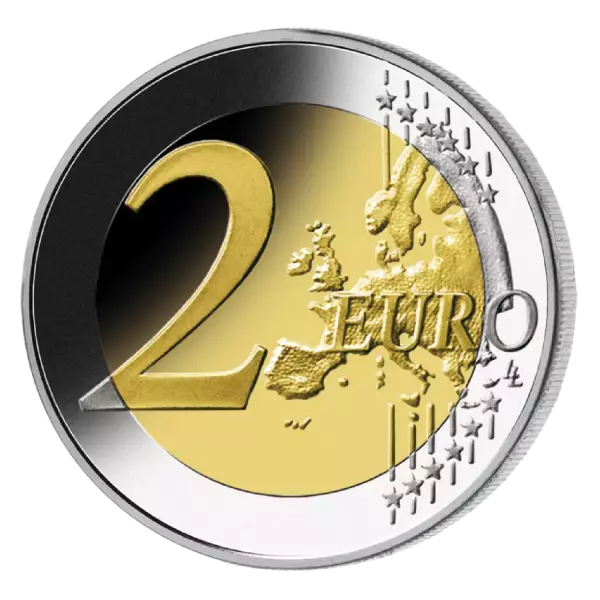
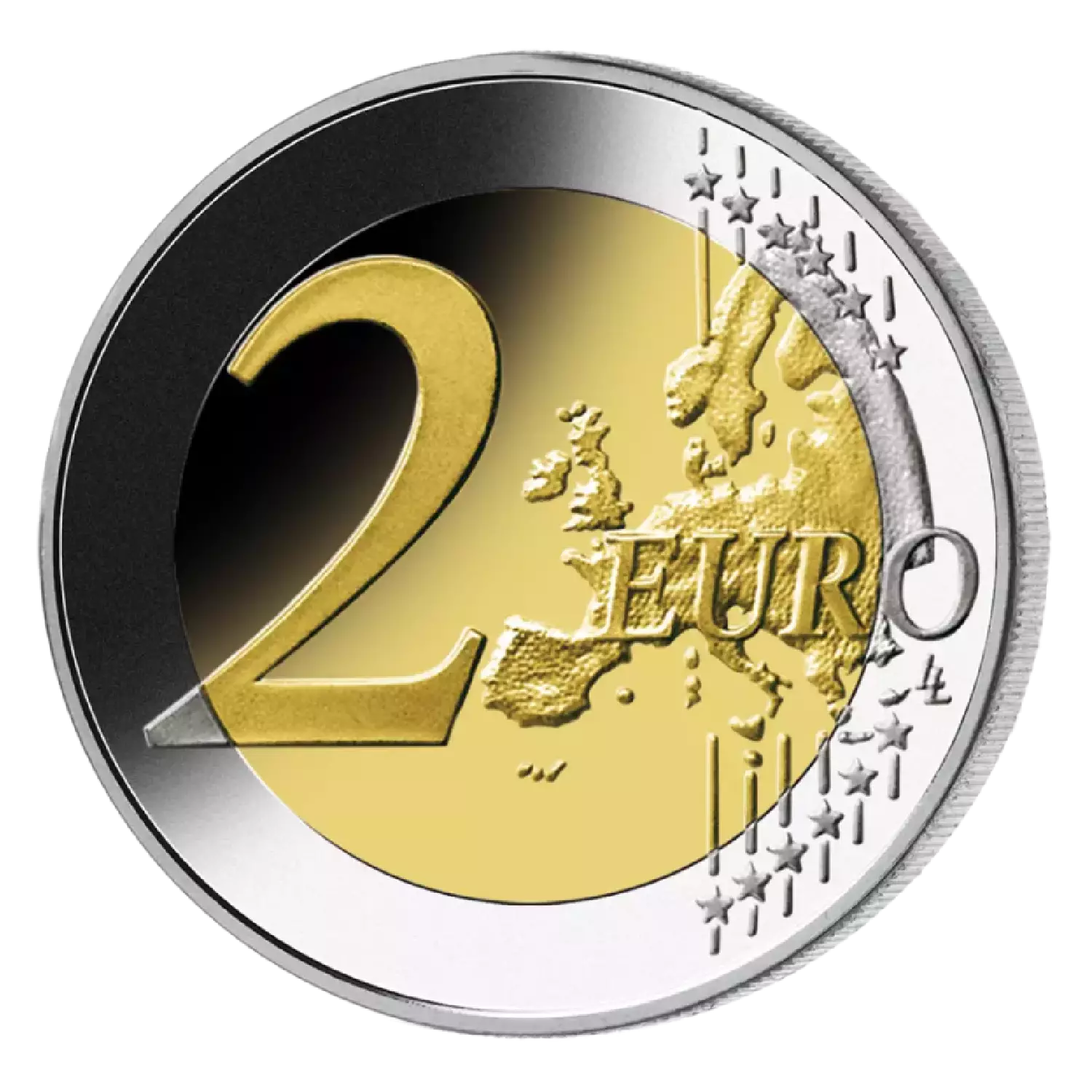
The reverse is the common side of the 2 euro coins of the second type, designed by Luc Luix. It depicts a map of Europe as a single continent without internal borders. On the left is a large denomination "2" and the inscription "EURO", on the right is a map. On the outer ring - 12 EU stars. The band - with fine ribbing and the inscription "2 ★", repeated six times alternately upright and inverted.
Historical context
The European Year of Cultural Heritage 2018 is an initiative of the European Union, proclaimed by the European Parliament and the Council of the EU by decision of 17 May 2017. The aim was to encourage as many people as possible to discover and appreciate Europe's cultural heritage, to strengthen the sense of belonging to a common European space. For this year, more than 23,000 events were held in 37 countries. The sculptural group "Laocoon" is one of the most outstanding works of antiquity, found by chance on 14 January 1506 in the vineyards on the Esquiline Hill in Rome. Pope Julius II immediately purchased it, and it became the first exhibit of the Vatican Museums, having a huge influence on the art of Michelangelo and other Renaissance masters.