
Shopping Cart
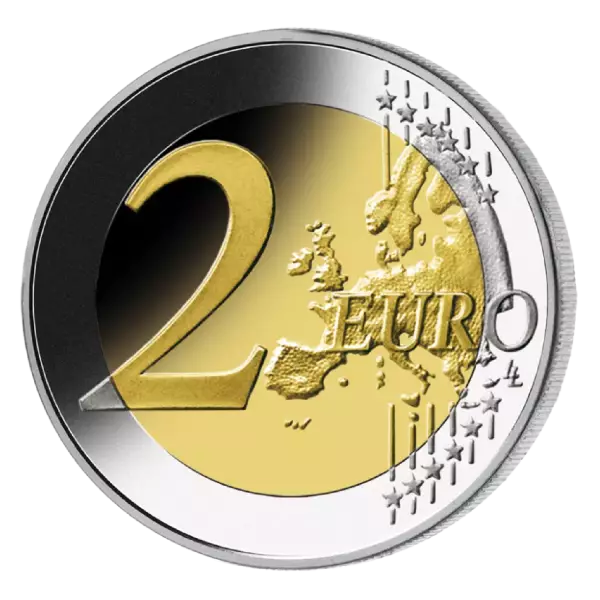

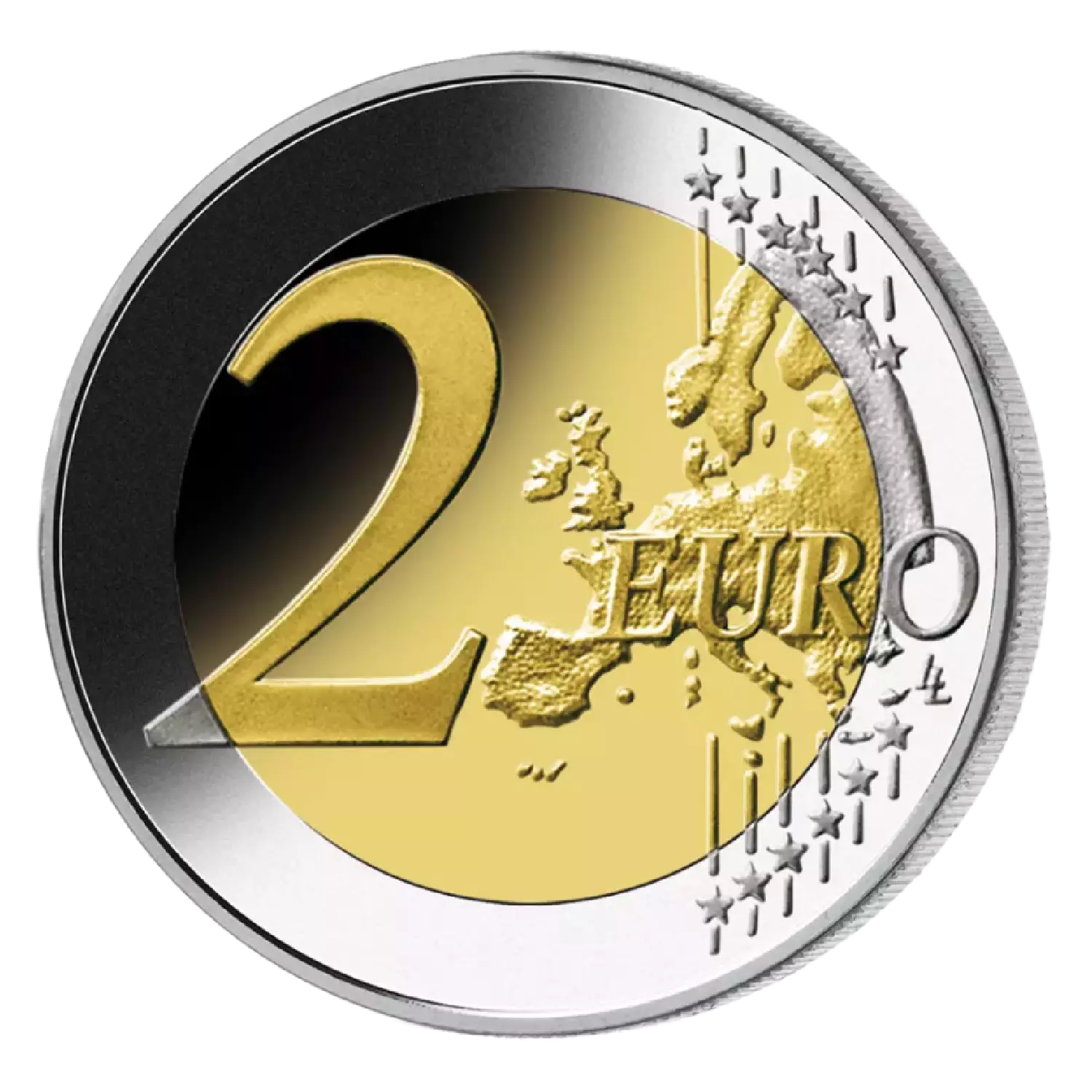
2 euro commemorative coin of the Vatican City State, issued on June 20, 2023, with a circulation of 68,000 copies. Dedicated to the 500th anniversary of the death of Pietro Perugino. Design by Daniela Fusco (FUSCO), engraver by Annalisa Masini (INC A.M.). Bimetallic, diameter 25.75 mm, weight 8.5 g. Minted at IPZS in Rome.
Overse
On the right is a portrait of Pietro Perugino, taken from the fresco "Ornamentation of the Cambio", created by the artist in 1500 and located in the Collegio del Cambio in Perugia. On the left is a fragment of the fresco “Baptism of Christ” (Battesimo di Cristo) from the Sistine Chapel in the Vatican, created by Perugino in 1482 as part of the “Life of Jesus” cycle. At the top right, in a semicircle, is the inscription “CITTÀ DEL VATICANO”. At the bottom, is the inscription “PERUGINO” and the years “1523◦2023”. On the left is the mint mark “R”. Above Perugino’s left shoulder is the signature of the designer “FUSCO”, near the right shoulder is the signature of the engraver “INC A.M.”. On the outer ring are the 12 stars of the EU.
Reverse
The reverse is the common side of the 2 euro coins of the second type, designed by Luc Luix. It depicts a map of Europe as a single continent without internal borders. On the left is a large denomination “2” and the inscription “EURO”, on the right is a map. On the outer ring - 12 EU stars. The band - with fine ribbing and the inscription "2 ★", repeated six times alternately upright and inverted.
Historical context
Pietro Vannucci, known as Perugino (c. 1446-1523), is an Italian painter of the Umbrian School, one of the most important masters of the Early Renaissance. Born in Città della Pieve (Umbria) c. 1446. He studied under Verrocchio in Florence with Leonardo da Vinci. He achieved fame in the 1480s, when Pope Sixtus IV invited him to Rome to paint the newly built Sistine Chapel together with Botticelli, Ghirlandaio and Cosimo Rosselli. His most famous works in the chapel are The Baptism of Christ and The Giving of the Keys to the Apostle Peter. Around 1500 he was the teacher of the young Raphael in Perugia. He created many Madonnas and church altarpieces, known for their soft, harmonious compositions. He died of the plague in Fontignano (Umbria) in February 1523.