
Shopping Cart
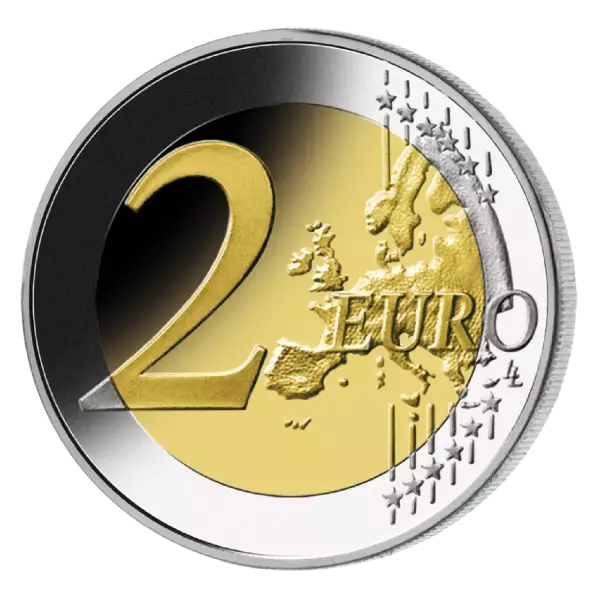

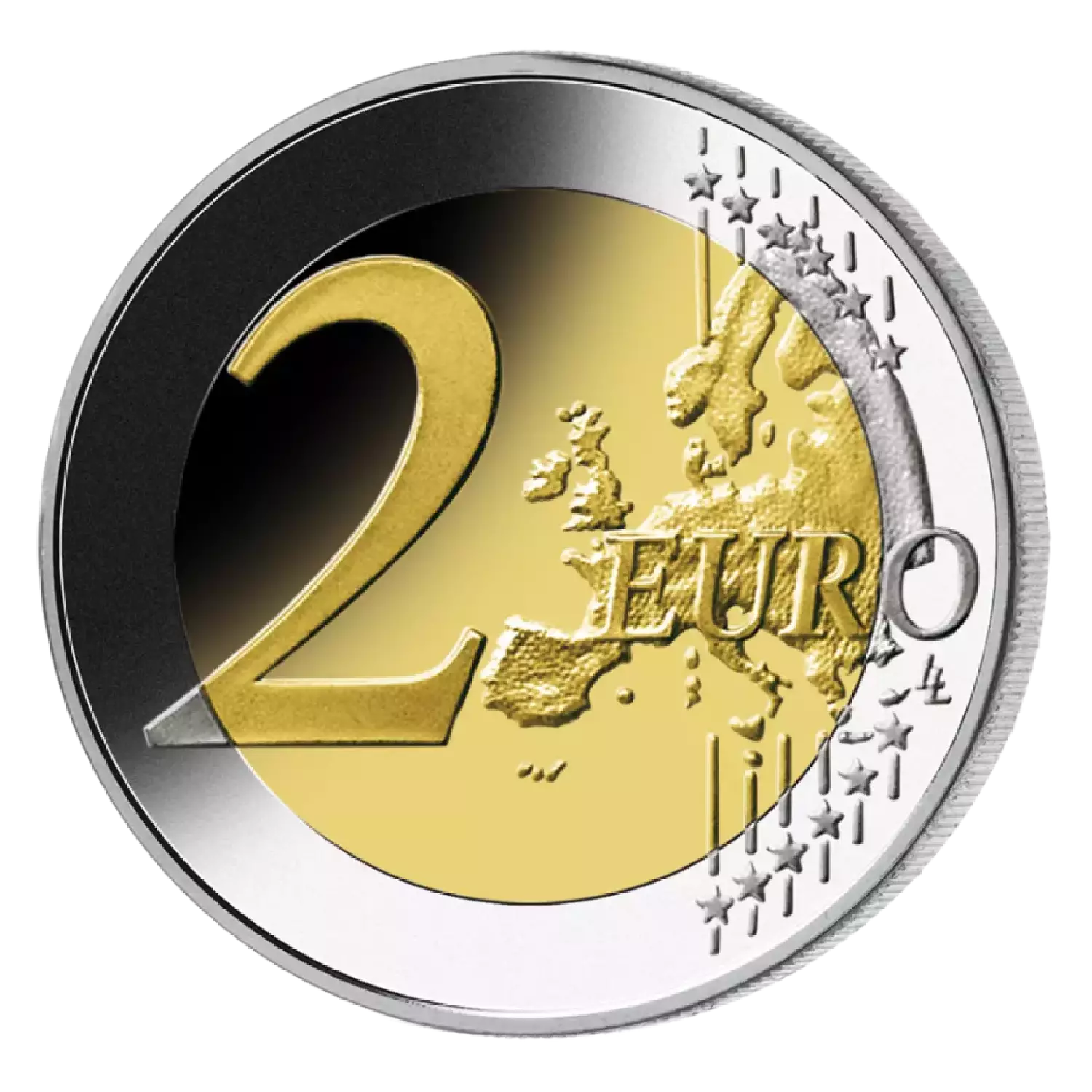
The 2 euro commemorative coin of Spain, issued in 2014 in a circulation of 4,000,000 copies, is the fifth in the series "Patrimonio de la Humanidad de la UNESCO". Dedicated to the works of Antonio Gaudi, specifically Park Güell in Barcelona. It was minted at the Madrid Mint. Bimetallic, diameter 25.75 mm, weight 8.5 g.
Overse
The national side depicts the famous sculpture "El Drac" - a dragon salamander, decorated with a trencadis mosaic (a technique of ceramic tile and glass fragments, characteristic of Gaudi). The sculpture is located at the main entrance to Park Güell and has become its symbol. In the background is a detail of one of the pavilions at the entrance. At the top, in an arc, are the inscriptions “ESPAÑA” and “PARK GÜELL – GAUDÍ”. On the left is the year “2014”, on the right is the Madrid mint mark “M” with a crown. On the outer ring are the 12 stars of the EU.
Reverse
The reverse is the common side of the 2 euro coins of the second type, designed by Luc Luix (Royal Belgian Mint). It depicts a map of Europe as a single continent without internal borders – a symbol of European unity. On the left is a large denomination “2” and the inscription “EURO”, on the right is a map with six thin horizontal lines in the background. On the outer ring are the 12 stars of the European Union. The band is finely fluted and has the inscription "2 ★", repeated six times, alternating upright and inverted.
Historical context
Park Güell is a garden and park complex with architectural elements in the Gracia district of Barcelona, designed by Antonio Gaudí (1852-1926) and commissioned by the industrialist Eusebi Güell. Originally conceived as an "English garden city" of 60 residential villas, the project failed commercially, and construction was stopped in 1914. In 1922, the city government of Barcelona bought the area and turned it into a public park. Opened to visitors in 1926. The park combines gardens, architectural pavilions (the famous "gingerbread houses"), the famous multi-columned hall (hipóstila sala) and a terrace with a sculptural bench covered with trencadis mosaics - one of the longest in the world. In 1984, Park Güell, together with the Palau Güell and La Pedrera, was included in the UNESCO list as part of the "Works of Antonio Gaudí", and in 2005 it was expanded with the addition of Casa Vicens, the crypt and the Nativity facade of the Sagrada Familia, Casa Batlló and the crypt of Colonia Güell.