
Shopping Cart
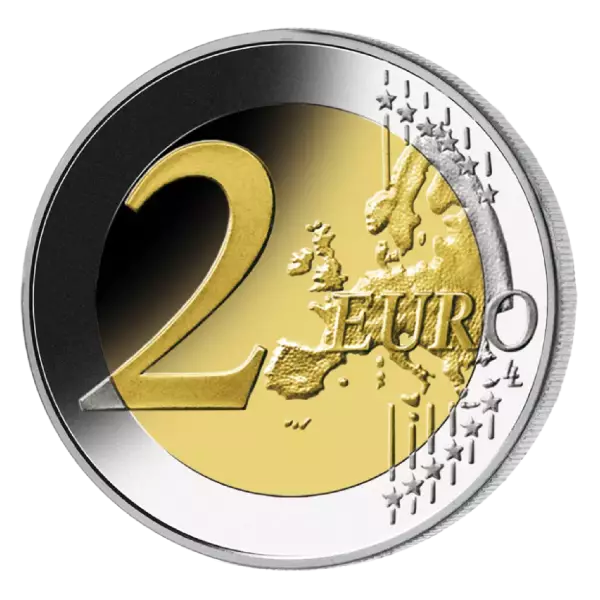

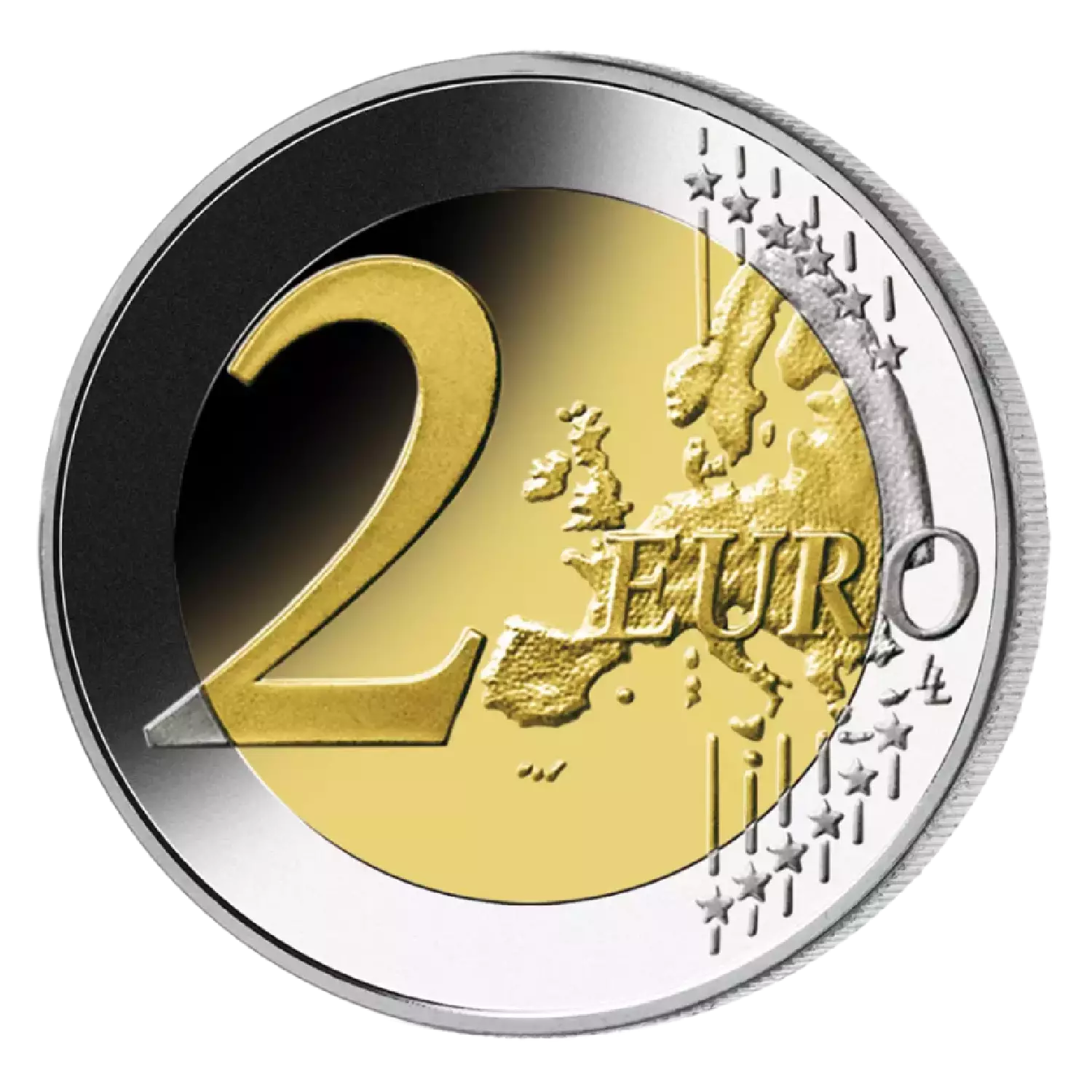
The 2 euro commemorative coin of Spain, issued in 2017 with a circulation of 8,000,000 copies, is the eighth in the "Patrimonio de la Humanidad de la UNESCO" series. Dedicated to the monuments of Oviedo and the Kingdom of Asturias - specifically the church of Santa María del Naranco. It was minted at the Madrid Mint. Bimetallic, diameter 25.75 mm, weight 8.5 g.
Overse
The national side depicts the church of Santa María del Naranco (Iglesia de Santa María del Naranco) - one of the most characteristic examples of the Asturian pre-Romanesque style of the 9th century. The figure shows a rectangular plan of the building with open loggias on two opposite facades and a gable roof, typical of Asturian architecture. At the top, in an arc, are the inscriptions "ESPAÑA" and the year "2017". On the right is the Madrid mint mark (the letter "M" crowned with a crown). On the outer ring are the 12 five-pointed stars of the EU.
Reverse
The reverse is the common side of the 2 euro coins of the second type, designed by Luc Luix (Royal Belgian Mint). It depicts a map of Europe as a single continent without internal borders - a symbol of European unity. On the left is a large denomination "2" and the inscription "EURO", on the right is a map with six thin horizontal lines in the background. On the outer ring are the 12 stars of the European Union. The band is with fine ribbing and the inscription "2 ★", repeated six times alternately upright and inverted.
Historical context
The Church of Santa María del Naranco is one of the most outstanding monuments of Asturian pre-Romanesque art, built by order of King Ramiro I of Asturias around 842-848 AD on the slope of Mount Naranco, 3 km from Oviedo. Initially, the building was conceived as an aula regia - the main hall of the summer royal palace (hence the name "Palace of Santa María"), and later, at the end of the 12th - beginning of the 13th century, it was converted into a church. The architect was Tioda. The building has a two-story structure: the lower floor (crypt-shaped) served as a reception room and a bathhouse, the upper one as a ceremonial hall. The decoration includes corded columns, characteristic Asturian medallions with the victory cross and geometric motifs. Together with the church of San Miguel de Líno (nearby), Santa Cristina de Lena and the monuments of Oviedo were inscribed on the UNESCO list in 1985, and the site was expanded in 1998.