
Shopping Cart
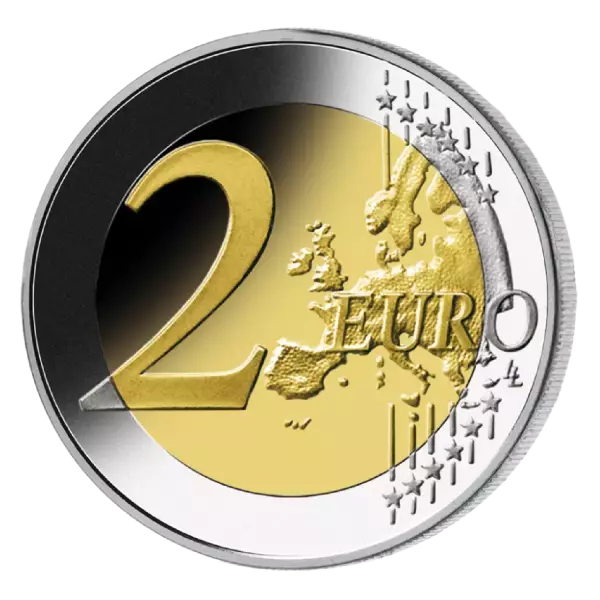

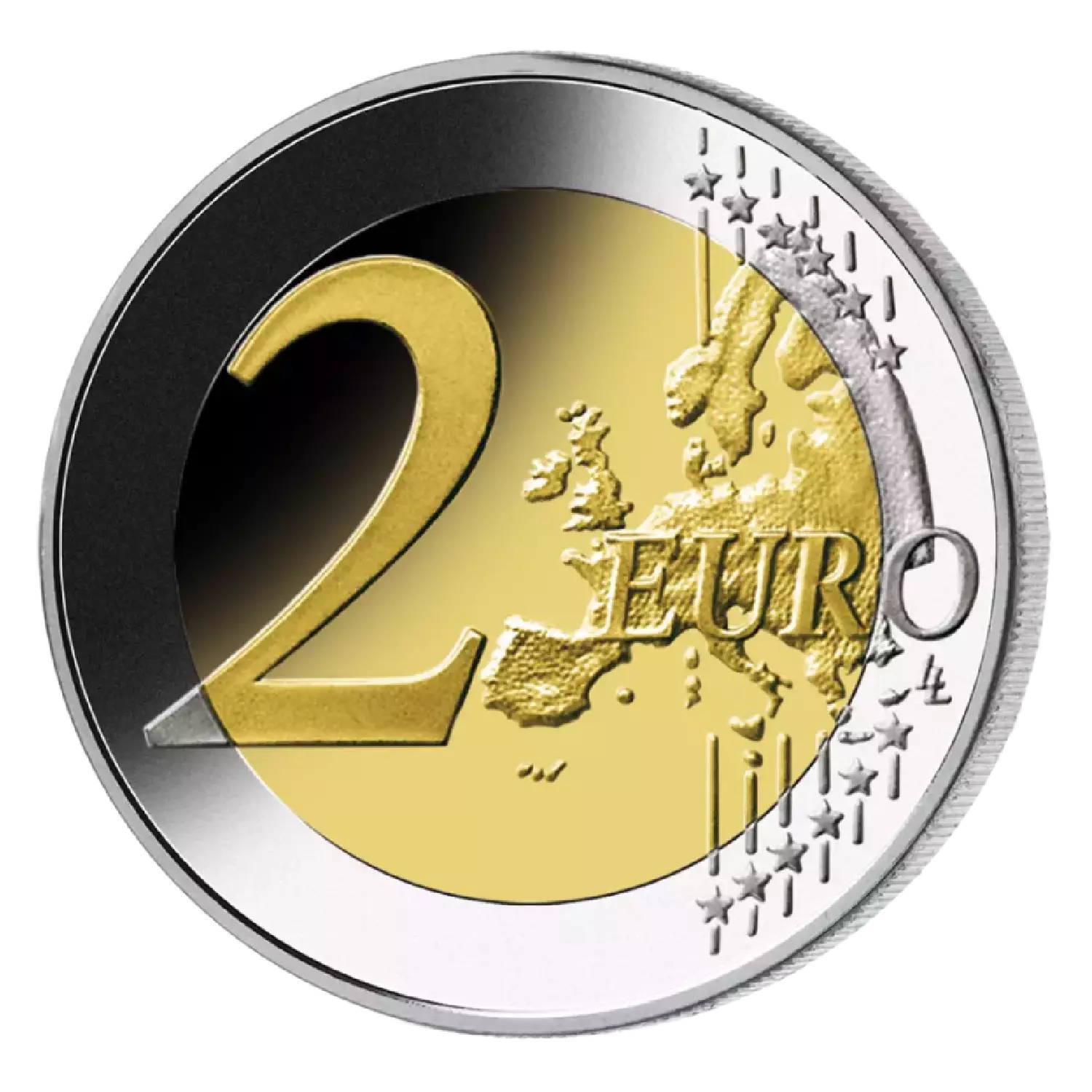
The 2 euro commemorative coin of Spain, issued in 2019 in a circulation of 300,000 copies, is the tenth in the "Patrimonio de la Humanidad de la UNESCO" series. Dedicated to the Old Town of Ávila with its walls and churches outside the walls. It was minted at the Madrid Mint. Bimetallic, diameter 25.75 mm, weight 8.5 g.
Overse
The national side depicts a detail of the famous medieval fortress walls of Ávila - the characteristic cylindrical towers (cubos) with crenellations, which are the main feature of the wall, are clearly visible. At the top, in an arc, is the inscription "ESPAÑA". At the bottom is the year "2019". On the right is the mark of the Madrid Mint in the form of the letter "M" crowned with a crown. The outer ring of the coin features the 12 five-pointed stars of the European Union.
Reverse
The reverse is the common side of the 2 euro coins of the second type, designed by Luc Luix (Royal Belgian Mint). It depicts a map of Europe as a single continent without internal borders, a symbol of European unity. On the left is a large denomination "2" and the inscription "EURO", on the right is a map with six thin horizontal lines in the background. On the outer ring are the 12 stars of the European Union. The band is with fine ribbing and the inscription "2 ★", repeated six times alternately upright and inverted.
Historical context
Ávila (Ávila) is a historic city at an altitude of 1131 meters above sea level in the province of Ávila (Castile and León, Spain) and is one of the best preserved fortified medieval cities in Europe. The main attraction is the completely preserved fortress walls of Ávila (Muralla de Ávila), built at the end of the 11th - in the first half of the 12th century. by order of King Alfonso VI of Castile, after the reconquest of the city from the Muslims. The walls are 2,516 m long, have 87 cylindrical towers (cubos) and 9 gates; The height reaches 12 m, the thickness is up to 3 m. Ávila is also the birthplace of Saint Teresa of Ávila (Teresa de Jesús, 1515-1582), the founder of the Discalced Carmelite order, one of the most prominent mystics of the Catholic Church, proclaimed a Doctor of the Church in 1970. The cathedral (11th-14th centuries), the Basilica of San Vicente (11th-13th centuries) and numerous Romanesque and Gothic churches within and outside the walls were included in the UNESCO list in 1985, with an extension in 2007.