Shopping Cart



In Stock
Coins of Ukraine
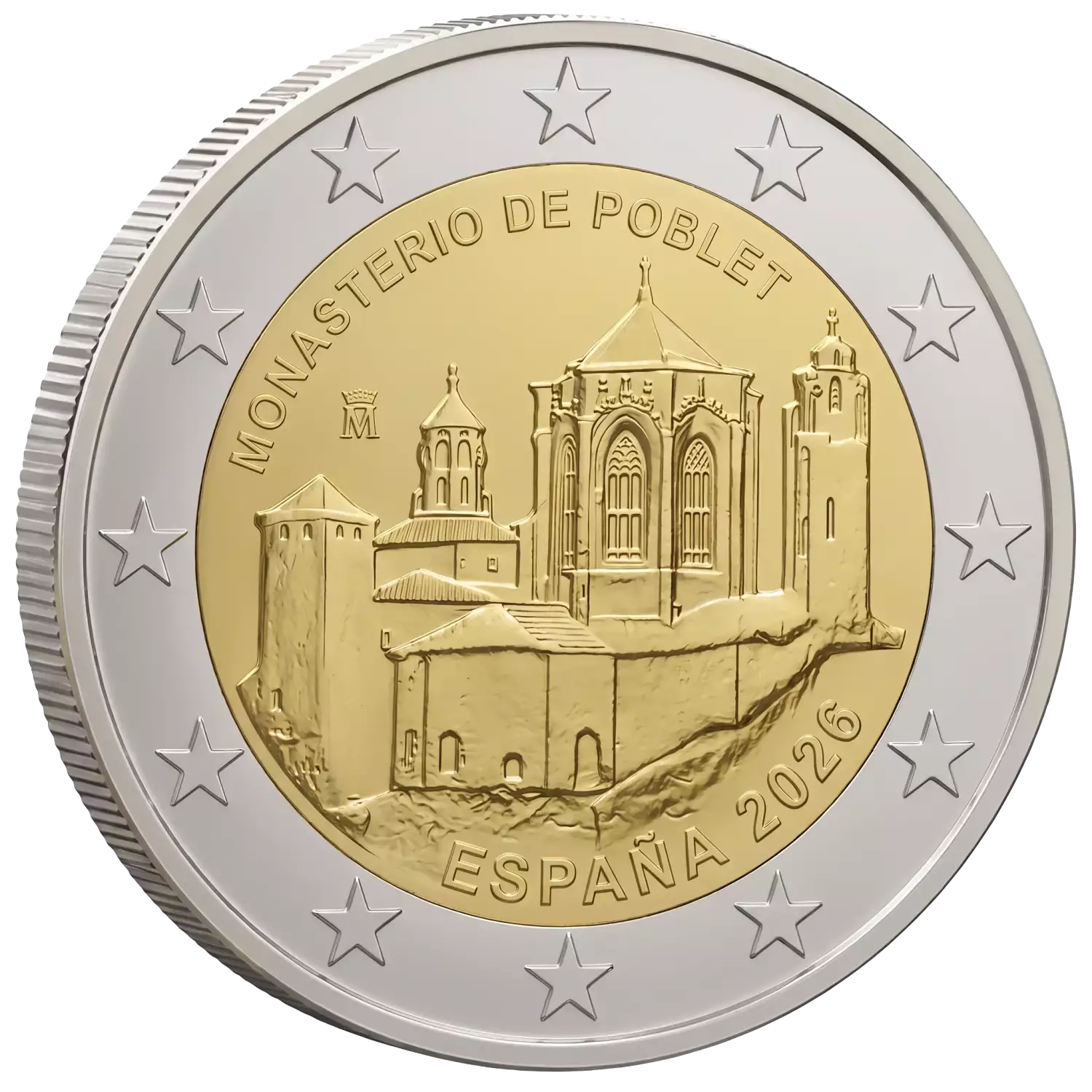
The 2 euro commemorative coin of Spain, issued in 2026, is the seventeenth in the series "Patrimonio de la Humanidad de la UNESCO". Dedicated to the Monastery of Poblet. It was minted at the Madrid Mint. Bimetallic, diameter 25.75 mm, weight 8.5 g.
The national side depicts a characteristic view of the monastery complex of Poblet with its medieval defensive walls, square and polygonal towers, a Gothic church and architectural elements from the 12th-15th centuries. At the top, along the arc, are the inscriptions "MONASTERIO DE POBLET" and "ESPAÑA". At the bottom, the year of issue "2026". In the field of the coin, there is a mark of the Madrid Mint (the letter "M" crowned with a crown). The outer ring of the coin features the 12 five-pointed stars of the European Union.
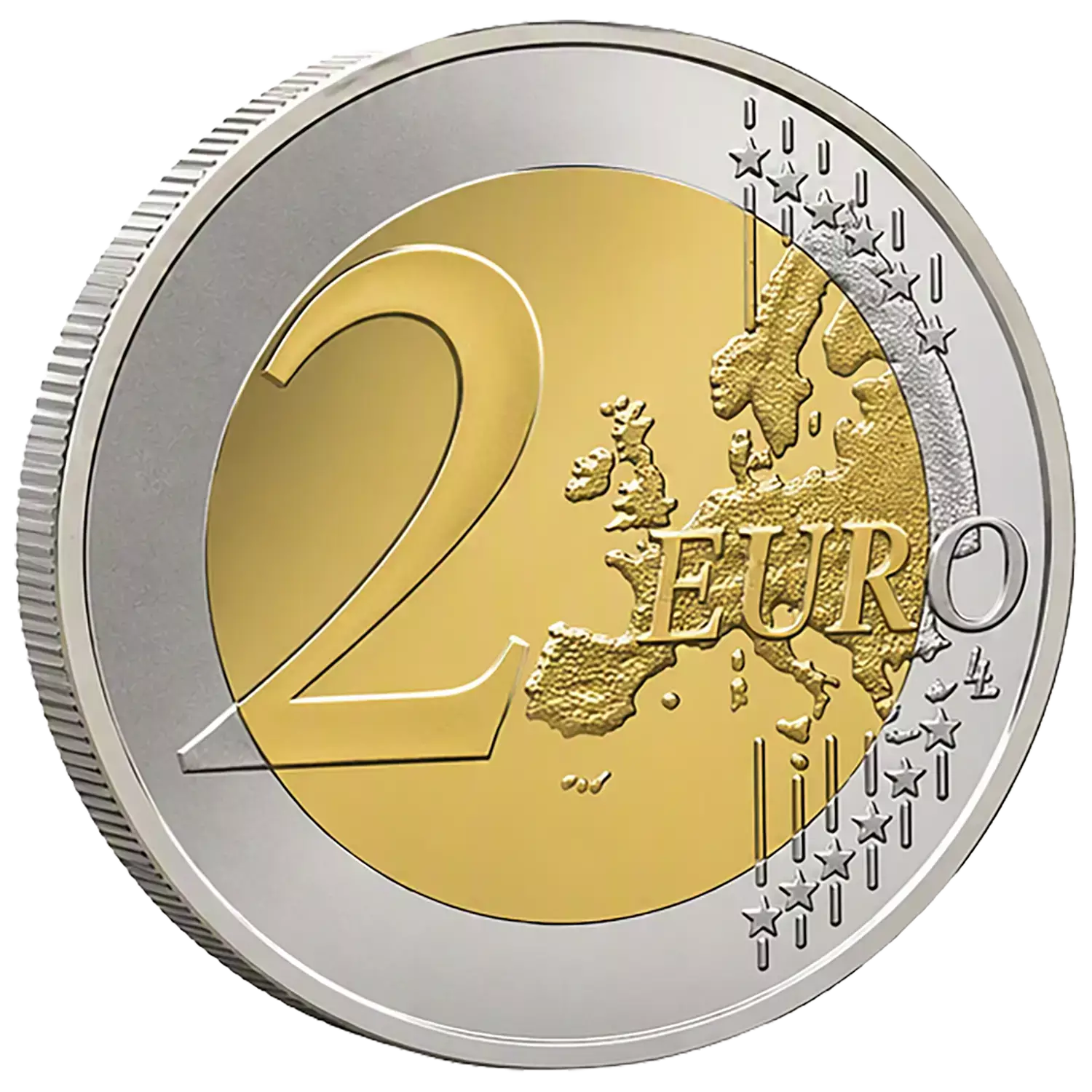
The reverse is the common side of the 2 euro coins of the second type, designed by Luc Luix (Royal Belgian Mint). It depicts a map of Europe as a single continent without internal borders, a symbol of European unity. On the left is a large denomination "2" and the inscription "EURO", on the right is a map with six thin horizontal lines in the background. On the outer ring are the 12 stars of the European Union. The band is finely fluted and has the inscription "2 ★", repeated six times alternately upright and inverted.
The Royal Monastery of Santa María de Poblet (Real Monasterio de Santa María de Poblet) is the largest active Cistercian monastery in Europe, located in the municipality of Vila Nova de Poblet (commune of Conca de Barbera, province of Tarragona, Catalonia). It was founded in 1150-1151 by Count of Barcelona and King of Aragon Ramon Berenguer IV, who donated land to the Cistercian monks from the Abbey of Fontfroid (Languedoc, France). The monastery consists of three concentric ensembles: the outer walls with the Prades Gate; the monastery courtyard; the sacred area with the church, the cloister and the royal pantheon. From the 14th century it served as the royal pantheon of the monarchs of Aragon - Alfonso II, Juan I, Martin I the Humane, Ferdinand I of Antequera, Juan II and Queen Maria of Castile are buried here. It was restored after the looting in 1835 (expropriation of Mendizábal). In 1991 the complex was included in the UNESCO list as a masterpiece of Cistercian architecture. Today the monastery is home to a community of over 30 monks.