Shopping Cart



In Stock
2 € coins
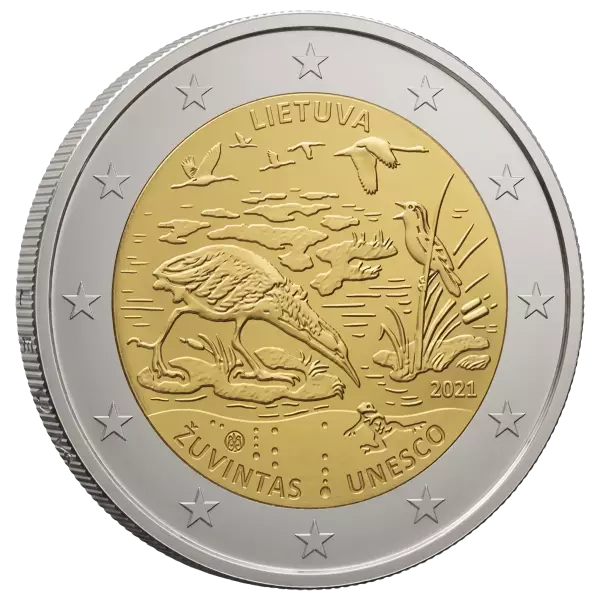
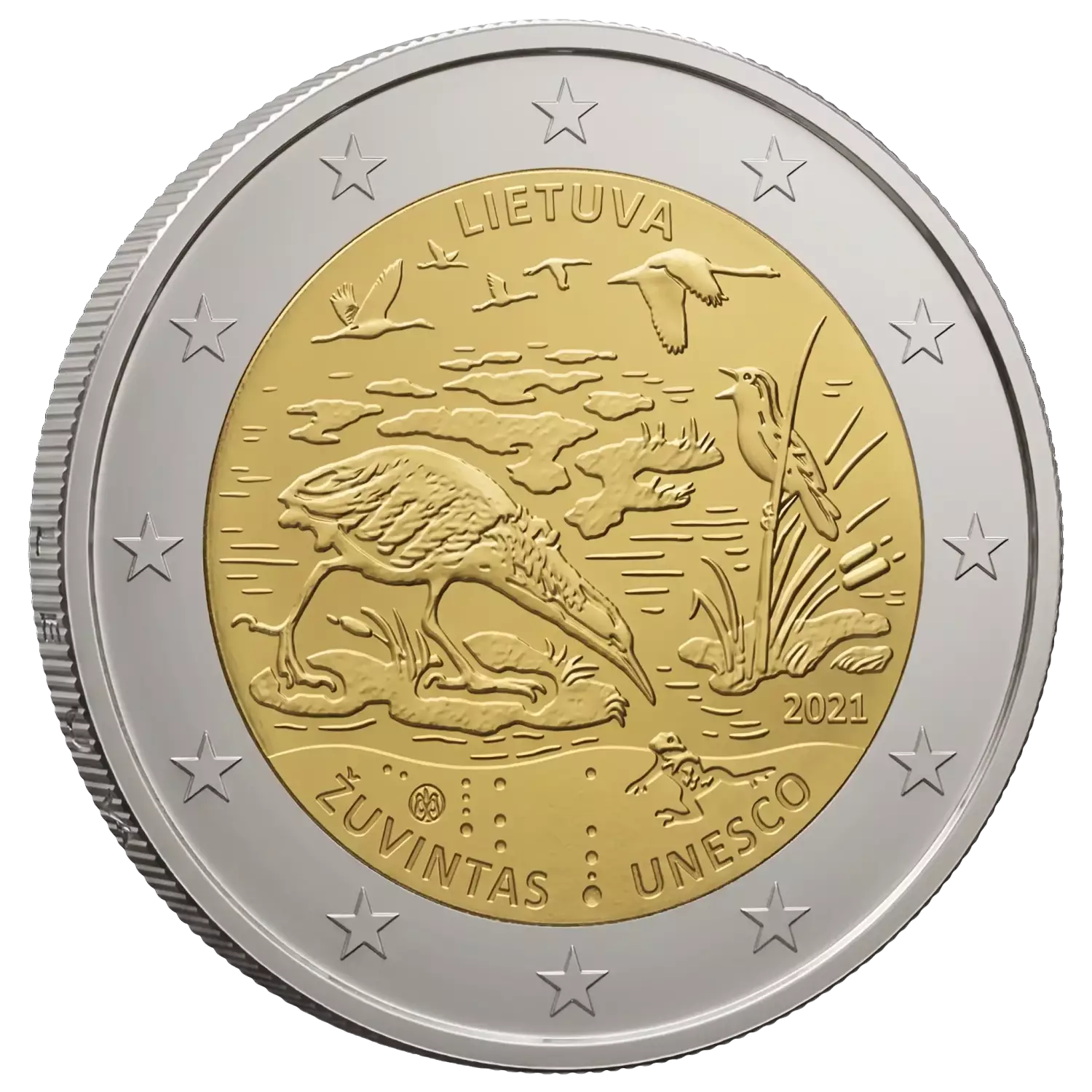
A 2 euro commemorative coin of the Republic of Lithuania, issued in 2021 in a circulation of 500,000 copies. Dedicated to the Žuvintas Biosphere Reserve. Minted at the Lithuanian Mint in Vilnius. Bimetallic, diameter 25.75 mm, weight 8.5 g.
The center of the coin depicts a stylized landscape of the Žuvintas Reserve - a lake with aquatic plants, the sky and a heron in flight as one of the key species living here. The design conveys the unique ecosystem of the reserve. The inscription "ŽUVINTAS" is placed around it. At the bottom is the name of the country "LIETUVA", the Lithuanian Mint mark "LMK", and the year of issue "2021". On the outer ring are the 12 five-pointed stars of the European Union.
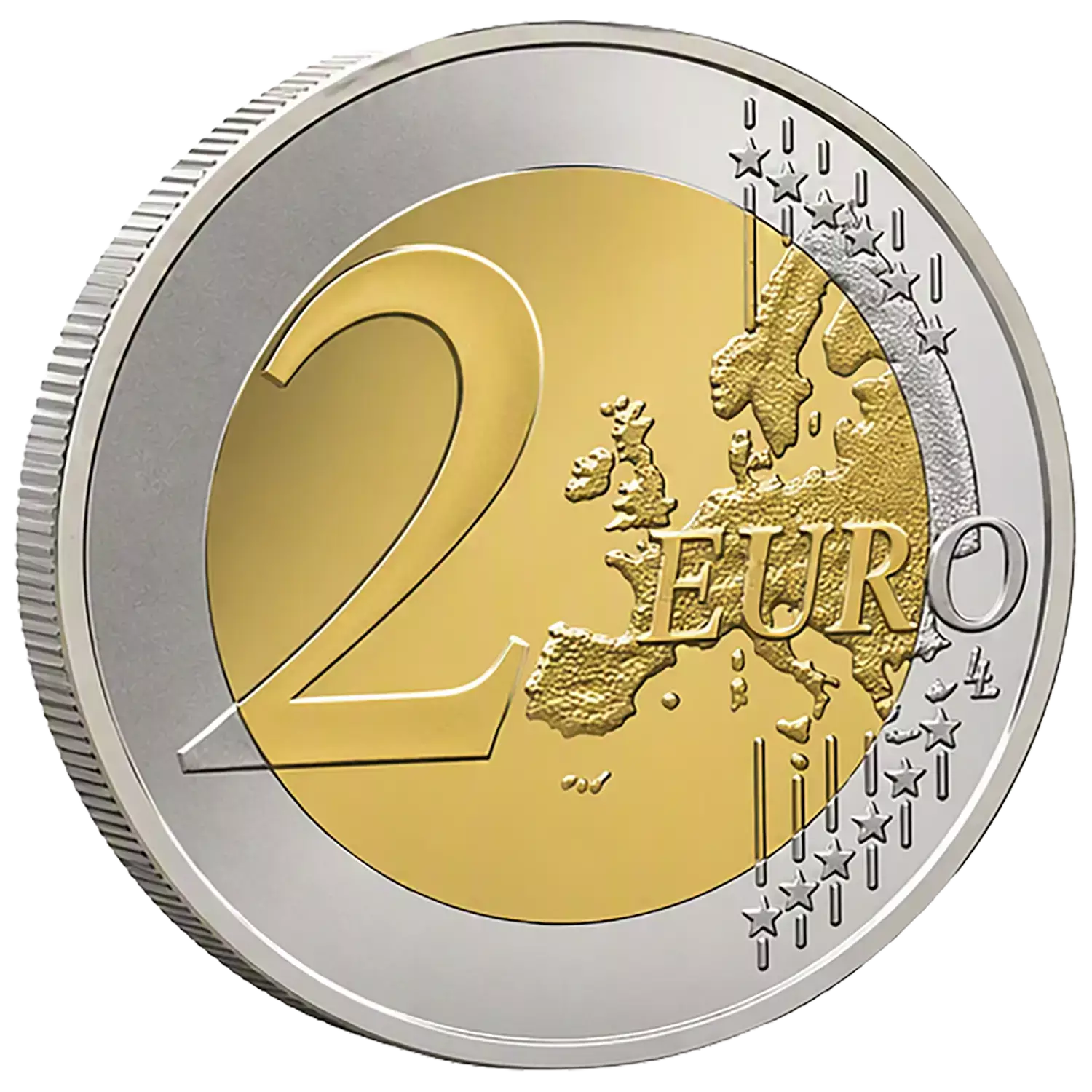
The reverse is the common side of the 2 euro coins of the second type, designed by Luc Luix (Royal Belgian Mint). It depicts a map of Europe as a single continent without internal borders - a symbol of European unity. On the left is a large denomination "2" and the inscription "EURO", on the right is a map with six thin horizontal lines in the background. On the outer ring are the 12 stars of the European Union. The rim is finely fluted and the Lithuanian inscription "LAISVĖ ★ VIENYBĖ ★ GEROVĖ ★" (Freedom, Unity, Prosperity).
Žuvinto biosferos rezervatas (Žuvinto biosferos rezervatas) is the oldest nature reserve in Lithuania, located in the southwest of the country, near the border with Poland. The reserve was established on May 6, 1937, initially as an ornithological reserve for the protection of marsh and wetland birds on Lake Žuvintas. The reserve area is 18,490 hectares, with Lake Žuvintas (990 hectares), Lake Amalvas (169 hectares), surrounding marshes, meadows and forests. The reserve is an important international center for migratory birds on the Baltic-Mediterranean flyway. More than 250 species of birds live here, including rare ones: black stork, marsh harrier, water shepherd. There are more than 40 species of mammals, 30 species of fish. Juvintas also belongs to wetlands of international importance (Ramsar Convention, 1993). In 2011, UNESCO recognized Juvintas as a Biosphere Reserve within the framework of the Man and the Biosphere (MAB) program.