
Shopping Cart
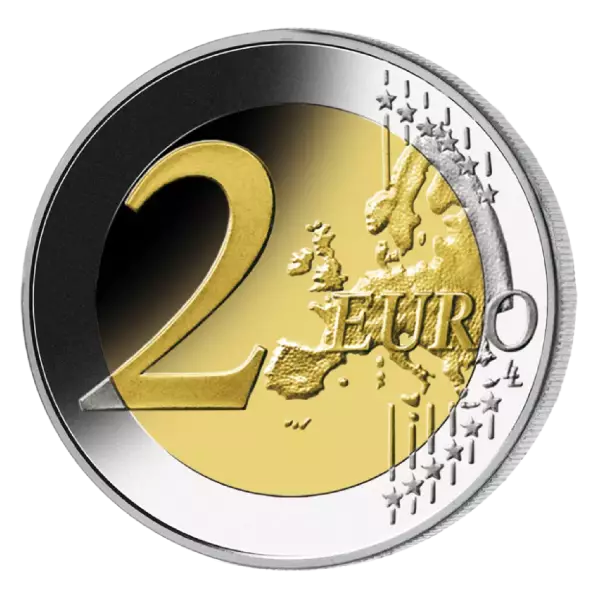

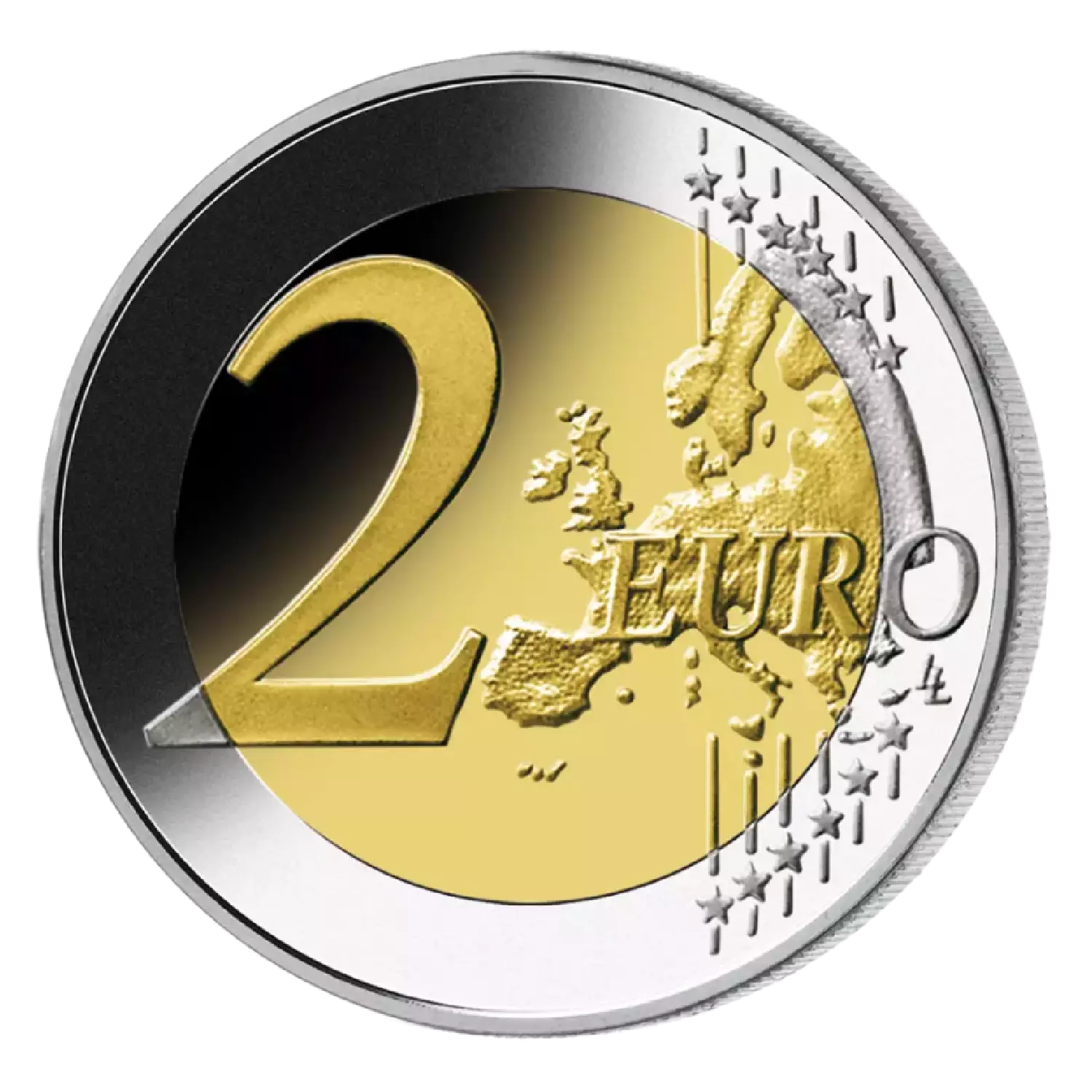
2 euro commemorative coin of the Federal Republic of Germany, issued on February 3, 2006. The first in the series "Federal States of Germany" (Bundesländer-Serie, 2006-2022). Dedicated to the state of Schleswig-Holstein. It was minted at all five German mints: A (Berlin), D (Munich), F (Stuttgart), G (Karlsruhe), J (Hamburg). Total mintage of about 30 million copies. Bimetallic, diameter 25.75 mm, weight 8.5 g.
Obverse
The center of the coin depicts the Holstentor in Lübeck - a characteristic medieval city gate with two massive round towers and a triangular pediment. Above is the name of the state "SCHLESWIG-HOLSTEIN". Below is the year of issue and the mint mark (A, D, F, G or J), as well as the initials of the designer Heinz Heuer and Snezhana Kuneva. On the left in the field is the inscription "BUNDESREPUBLIK DEUTSCHLAND" (Federal Republic of Germany). On the outer ring are the 12 five-pointed stars of the EU.
Reverse
The reverse is the common side of the 2 euro coins of the first type, designed by Luc Luix. It depicts a map of the enlarged European Union with stylized lines below the map. On the left is the large denomination "2" and the inscription "EURO". On the outer ring are the 12 five-pointed stars of the EU. The band is with fine ribbing and the German inscription "EINIGKEIT UND RECHT UND FREIHEIT" (Unity and Law and Freedom).
Historical context
The Holsten Gate (Holstentor, also called Holsten-Tor) is a monument of late Gothic architecture, a symbol of the city of Lübeck in Germany, now a UNESCO World Heritage Site. Built in 1464-1478 by the architect Heinrich Helmstedt as part of the defensive structures of Lübeck, the richest city of the Hanseatic League. The Holsten Gate consists of two massive round towers and a gabled building between them, decorated with the Latin inscription "CONCORDIA DOMI FORIS PAX" (Concord at home, peace abroad). Over time, the building tilted to the south due to subsidence. In the 19th century, the issue of demolition was considered, but a public initiative preserved the monument. Today, the Holstein Gate houses the City History Museum. Schleswig-Holstein is the northernmost federal state of Germany (between the Baltic and North Seas), bordering Denmark. The area is 15,800 km², and the population is about 2.9 million.