
Shopping Cart
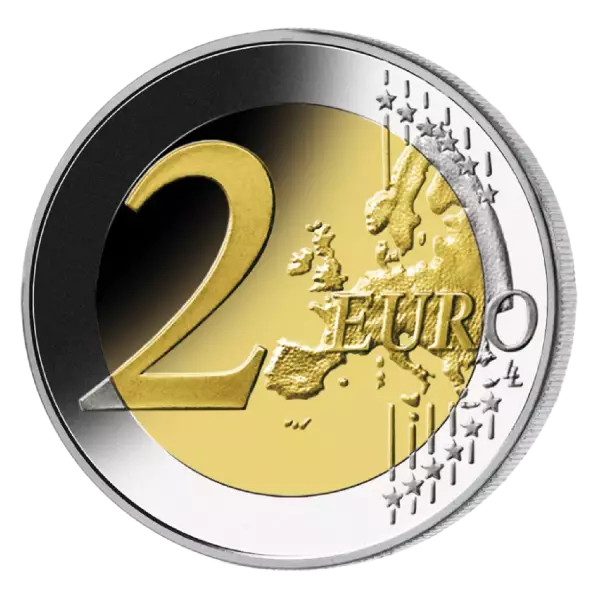

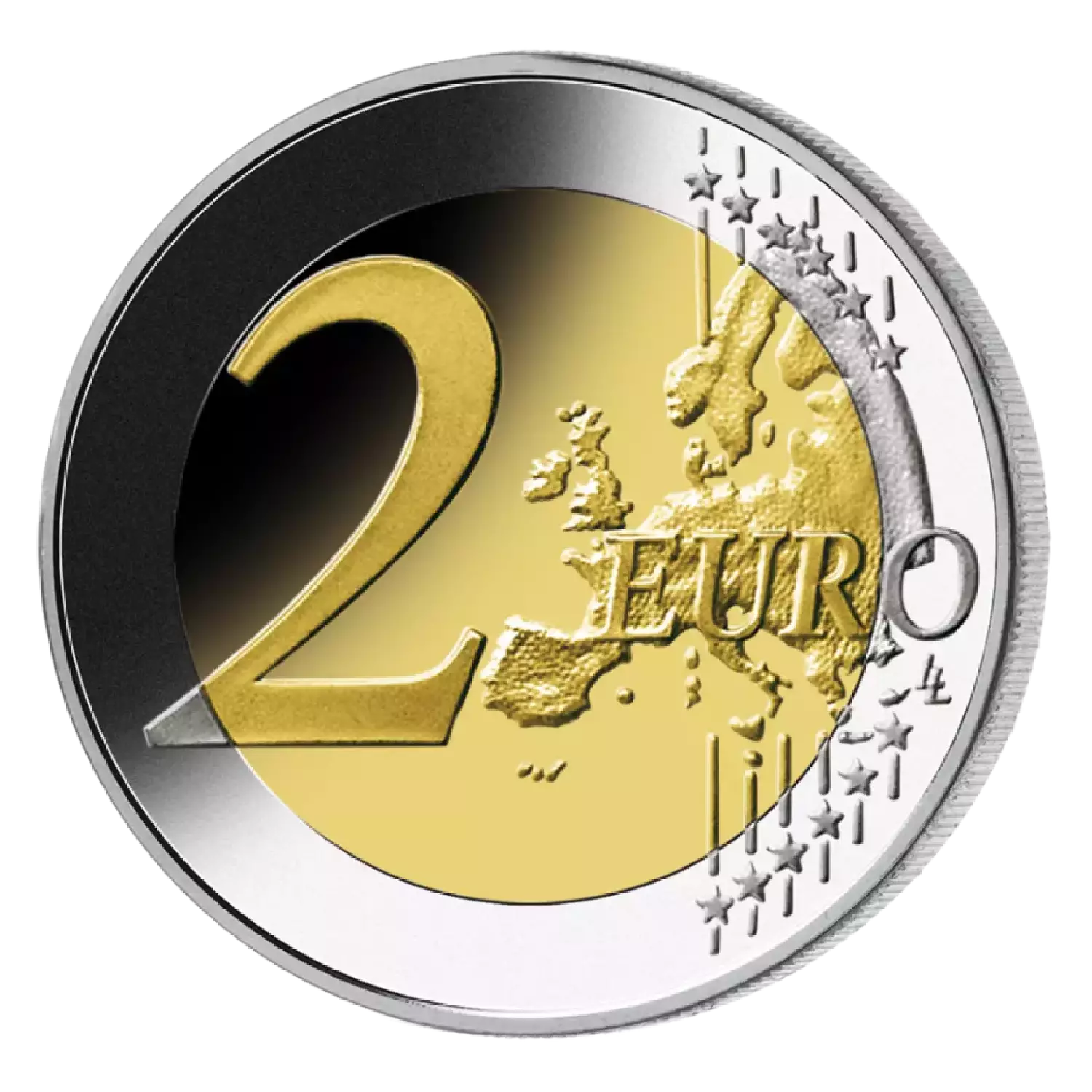
A 2 euro commemorative coin, issued by Austria in 2016 in a circulation of 16 million copies in honor of the 200th anniversary of the Austrian National Bank (OeNB). Bimetallic, diameter 25.75 mm, weight 8.5 g. Reverse - the common side of the 2 euro coins. Manufacturer - Austrian Mint.
Obverse
The obverse depicts two mythological figures from the Roman pantheon, which decorate the relief above the entrance to the main building of the OeNB. On the left - Mercury, the messenger of the gods and the god of merchants and commerce with a caduceus. On the right - Fortuna, the goddess of fate and prosperity, depicted with a cornucopia. In the background from left to right, the OeNB main office building is visible. The decorative stripe at the bottom with vertical hatching evokes the red-white-red colors of the Austrian national flag. The years "1816" and "2016" to the left of Mercury indicate the year of the bank's foundation and its bicentenary. At the top is the inscription "REPUBLIK ÖSTERREICH", at the bottom in a semicircle - "200 JAHRE OESTERREICHISCHE NATIONALBANK". On the outer ring - 12 EU stars.
Reverse
The reverse is the common side of the 2 euro coins of the second type, designed by Luc Luix. It depicts a map of Europe without internal borders, on the left - the denomination "2" and the inscription "EURO", on the right - a map. On the outer ring - 12 EU stars. The band has a fine groove with the inscription "2 EURO ***", repeated four times.
Historical context
The Austrian National Bank (Oesterreichische Nationalbank, OeNB) was founded on June 1, 1816, by Emperor Franz I, at the initiative of Count Johann Philipp Stadion. The creation of the bank was a response to a period of high currency depreciation in Austria during the Napoleonic Wars, when the Habsburg state issued unsecured paper money, which led to the crisis of 1811. The OeNB received the exclusive right to issue banknotes and stabilized the financial system. Today, the OeNB is the central bank of Austria and a full member of the European System of Central Banks within the Eurosystem, participating in the formation of the monetary policy of the euro area.