Shopping Cart



In Stock
2 € coins
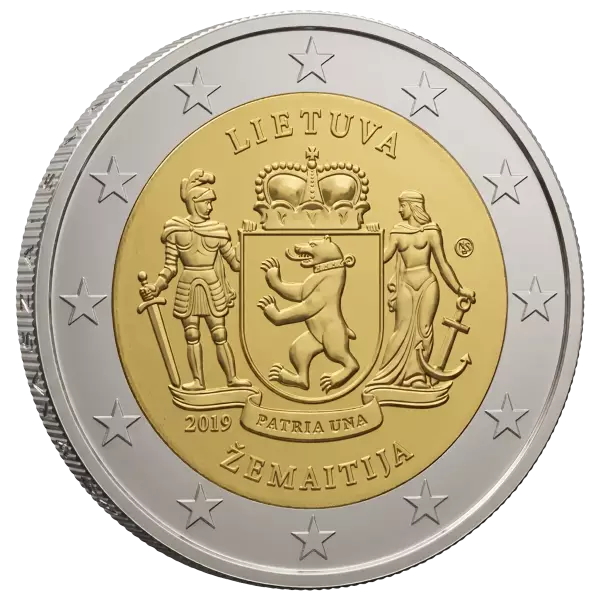
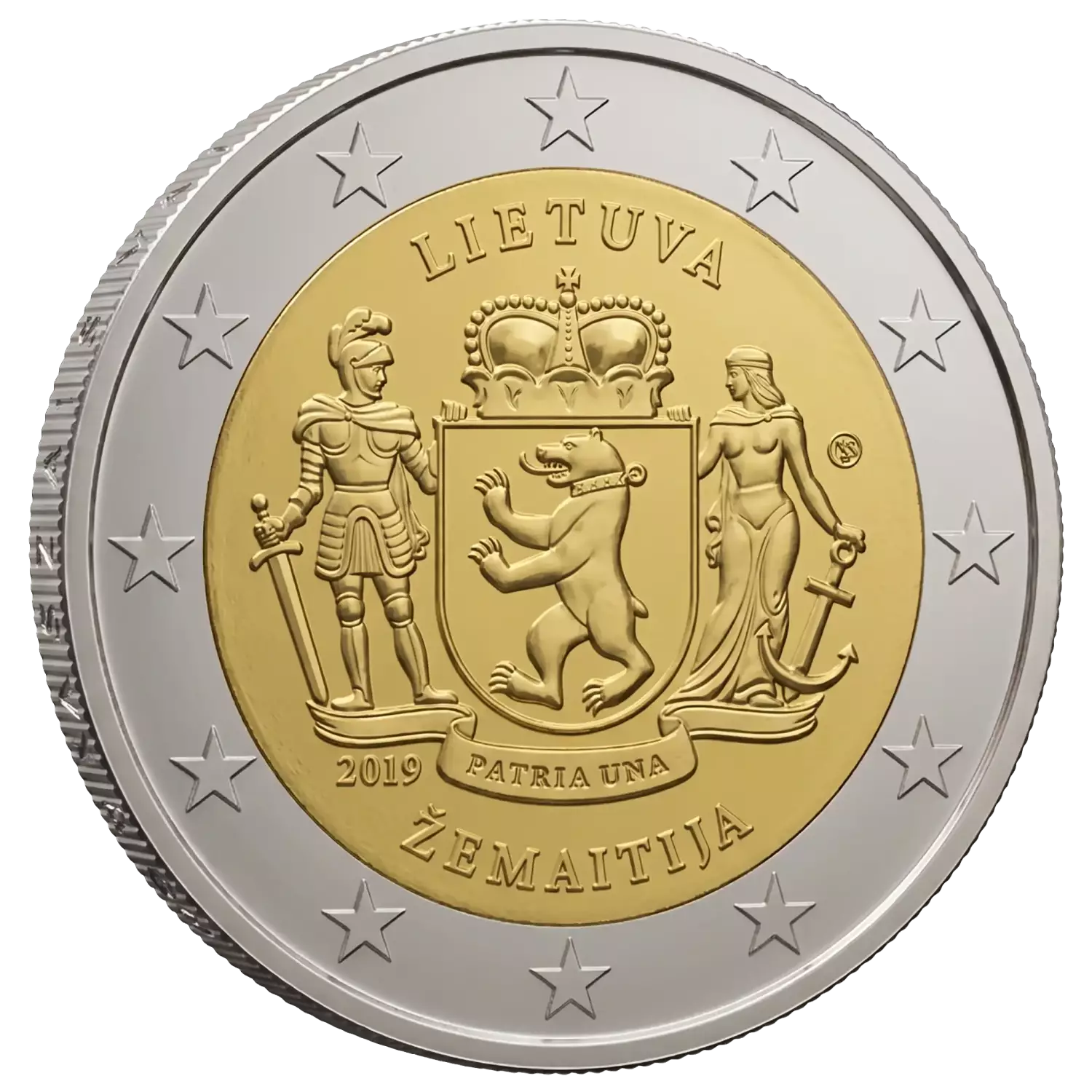
A 2 euro commemorative coin of the Republic of Lithuania, issued in 2019 in a circulation of 500,000 copies. The first in the series "Lithuanian Ethnographic Regions", dedicated to Samogitia. It was minted at the Lithuanian Mint. Bimetallic, diameter 25.75 mm, weight 8.5 g.
In the center of the coin is the coat of arms of Samogitia (Žemaičių herbas) - the historical heraldic sign of the region with a black bear in a golden field. The bear symbolizes strength, courage and the connection of the region with nature. At the top in an arc is the name of the region "ŽEMAITIJA". At the bottom - "LIETUVA" and the year "2019". On the ring are the 12 stars of the EU.
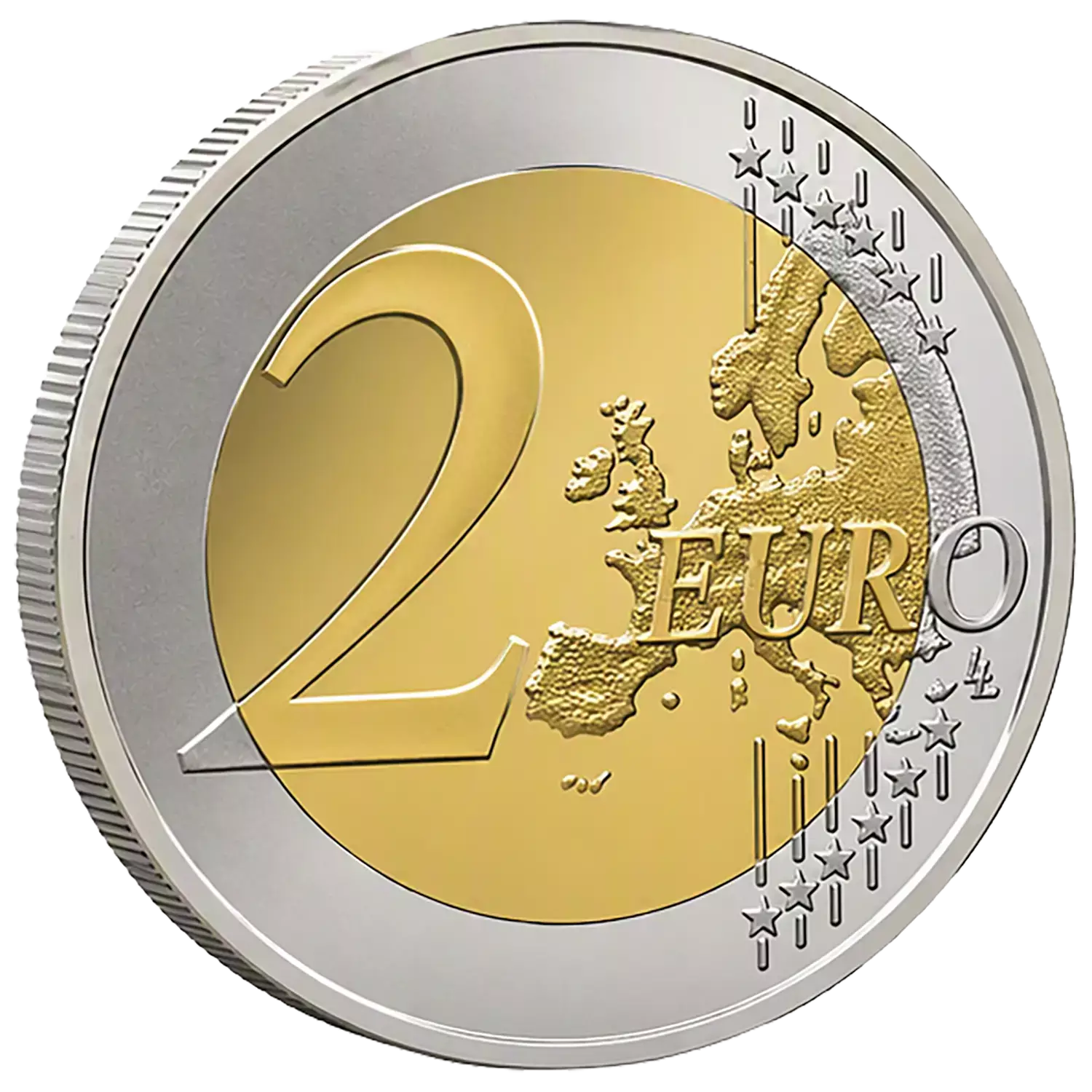
The reverse is the common side of the 2 euro coins of the second type, designed by Luc Luix (Royal Belgian Mint). It depicts a map of Europe as a single continent without internal borders - a symbol of European unity. On the left is a large denomination "2" and the inscription "EURO", on the right is a map with six thin horizontal lines in the background. On the outer ring are the 12 stars of the European Union. The rim is finely fluted and the Lithuanian inscription "LAISVĖ ★ VIENYBĖ ★ GEROVĖ ★" (Freedom, Unity, Prosperity).
Žemaitija (Latin Samogitia - "lowland") is one of the five historical and ethnographic regions of Lithuania, located in the western part of the country, between the Baltic Sea and the Nevėžys River. The population is about 500,000 people. The main cities are Šiauliai, Telšiai, Klaipėda, Tauroge. The region has a particularly strong identity, linguistic (the Samogitian dialect, which is often considered a separate language) and cultural. Samogitia heroically resisted the expansion of the Teutonic Order (Battle of Grunwald in 1410), so it was the last region in Europe to adopt Christianity - only in 1413, 26 years after the rest of Lithuania. The region is known for its agricultural heritage, old towns, and the unique Samogitian horse (Žemaitukas). Samogitia is home to the famous Hill of Crosses - one of the most famous pilgrimage sites in Lithuania.